What is DDJAY? Haryana's plotted-colony scheme, in plain language.
Read straight from the Town & Country Planning Department's 2016 policy, with what each rule means for the family buying the plot.
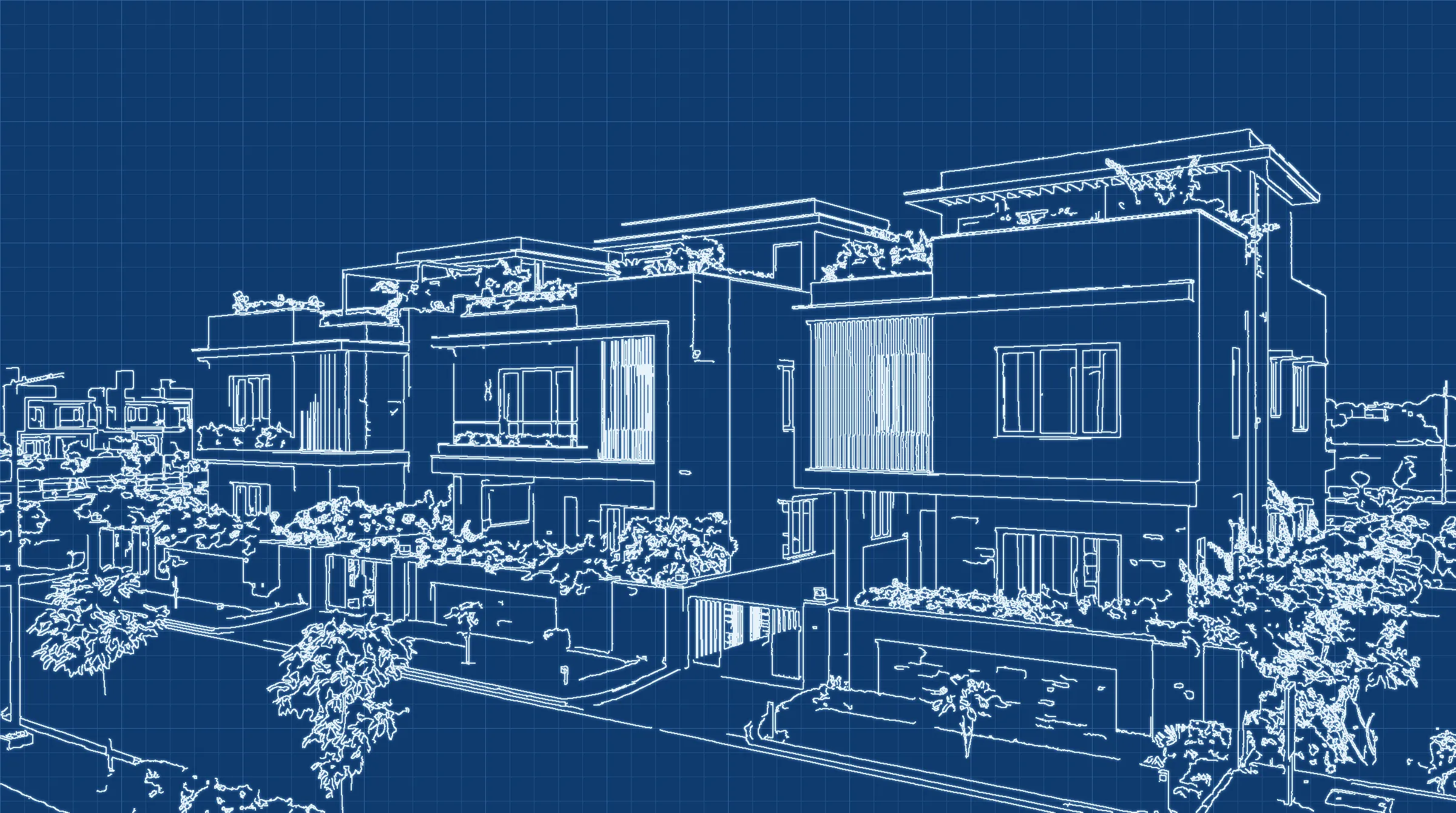
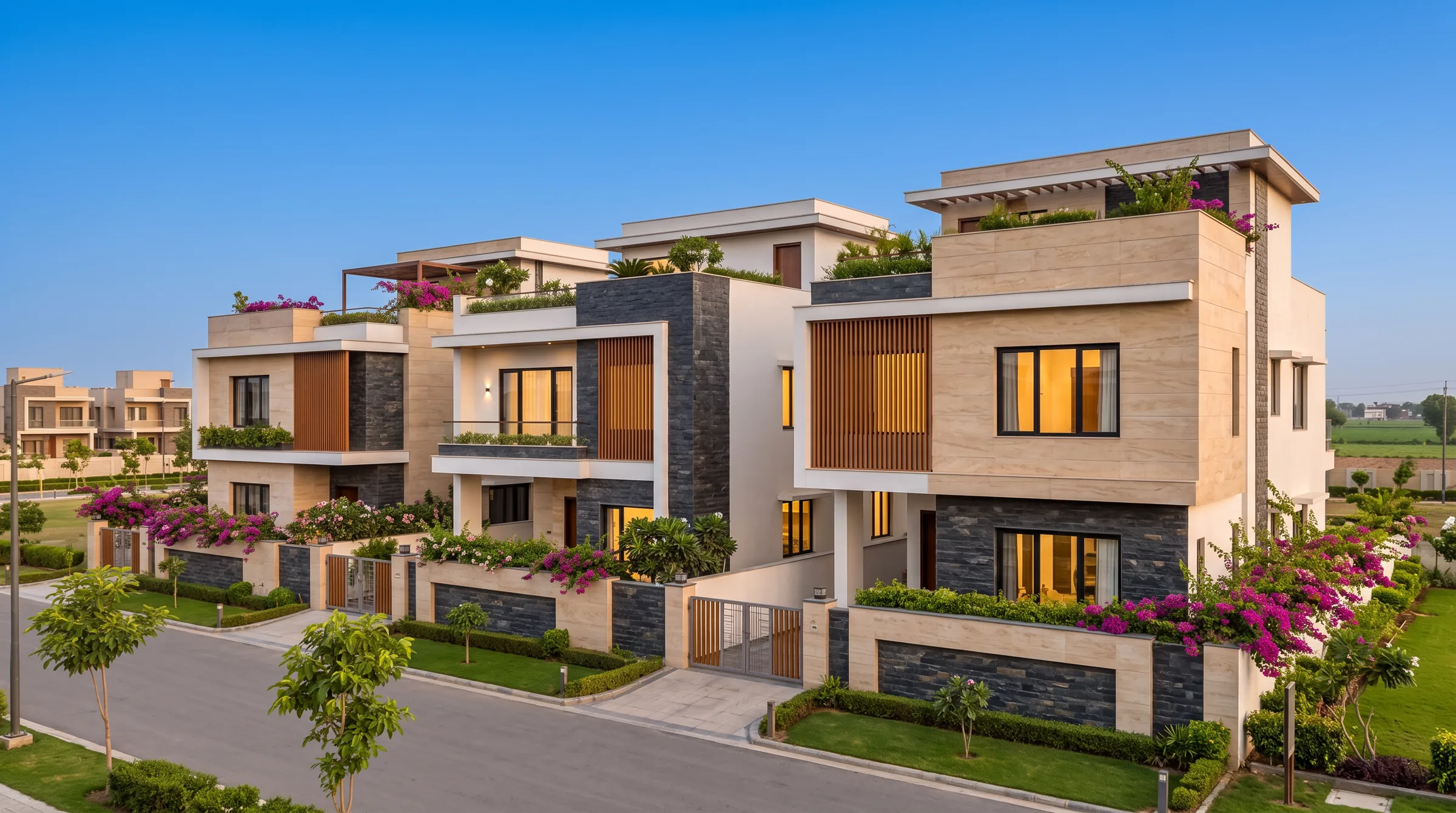
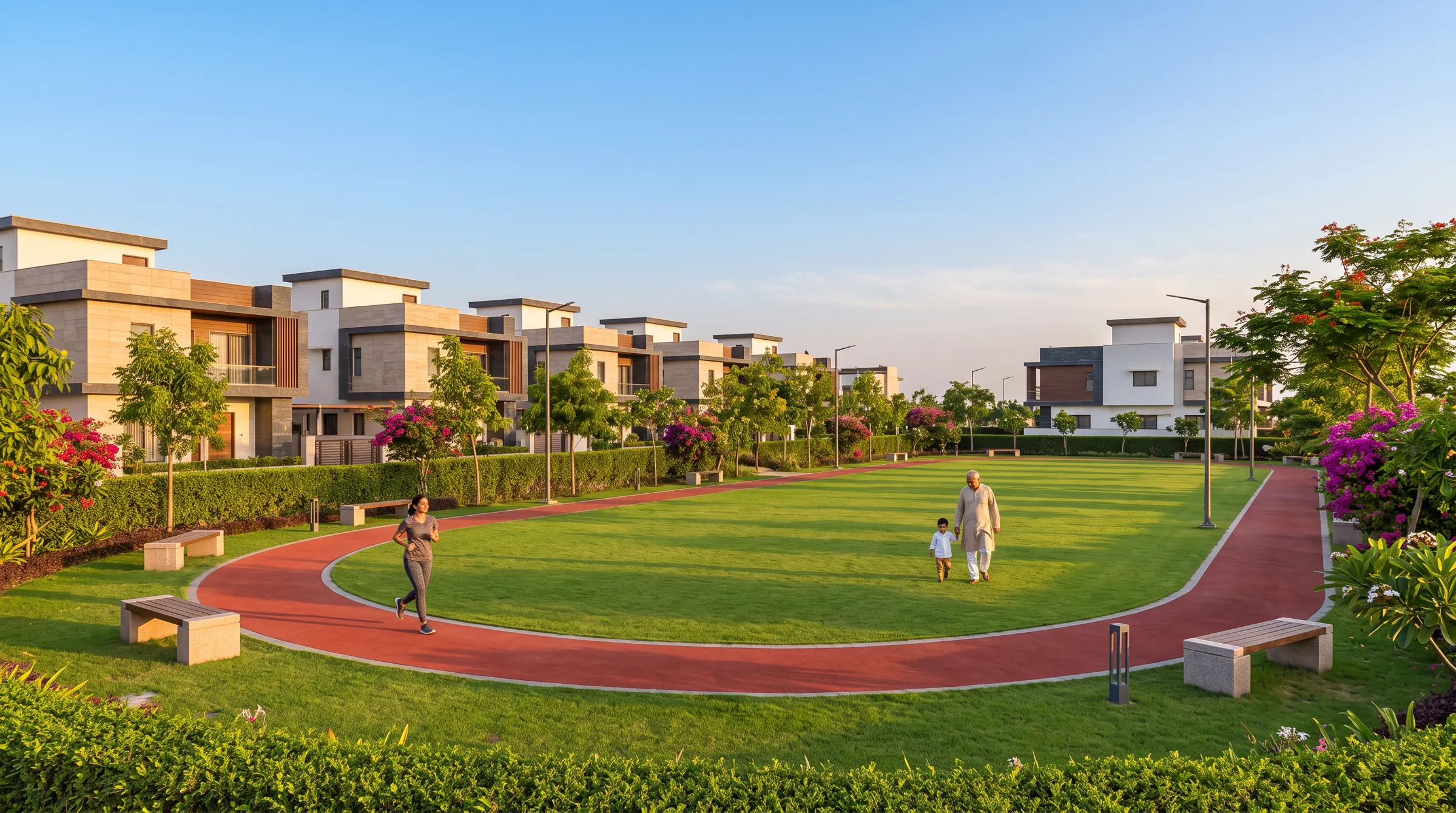
Artist’s impression
8 Feb 2016
Notified
150 m²
Max plot
5–15 acres
Colony size
7 years
Completion
01
The short version
Deen Dayal Jan Awas Yojana is Haryana's Affordable Plotted Housing Policy for low and medium potential towns, notified on 8 February 2016. It lets licensed private developers build small, high-density plotted colonies with small plots, so more families can buy land and build their own home.
The government does not sell these plots. It licenses the colony and sets the rules; the developer builds and sells, and the project is registered with HRERA.
02
The rules, and what they mean for you
| Rule | The policy says | What it means for a buyer |
|---|---|---|
| Plot size | Maximum 150 m² | Plots top out at about 179 gaj |
| Colony size | 5 to 15 acres net planned area | Small, low-rise colonies, not townships |
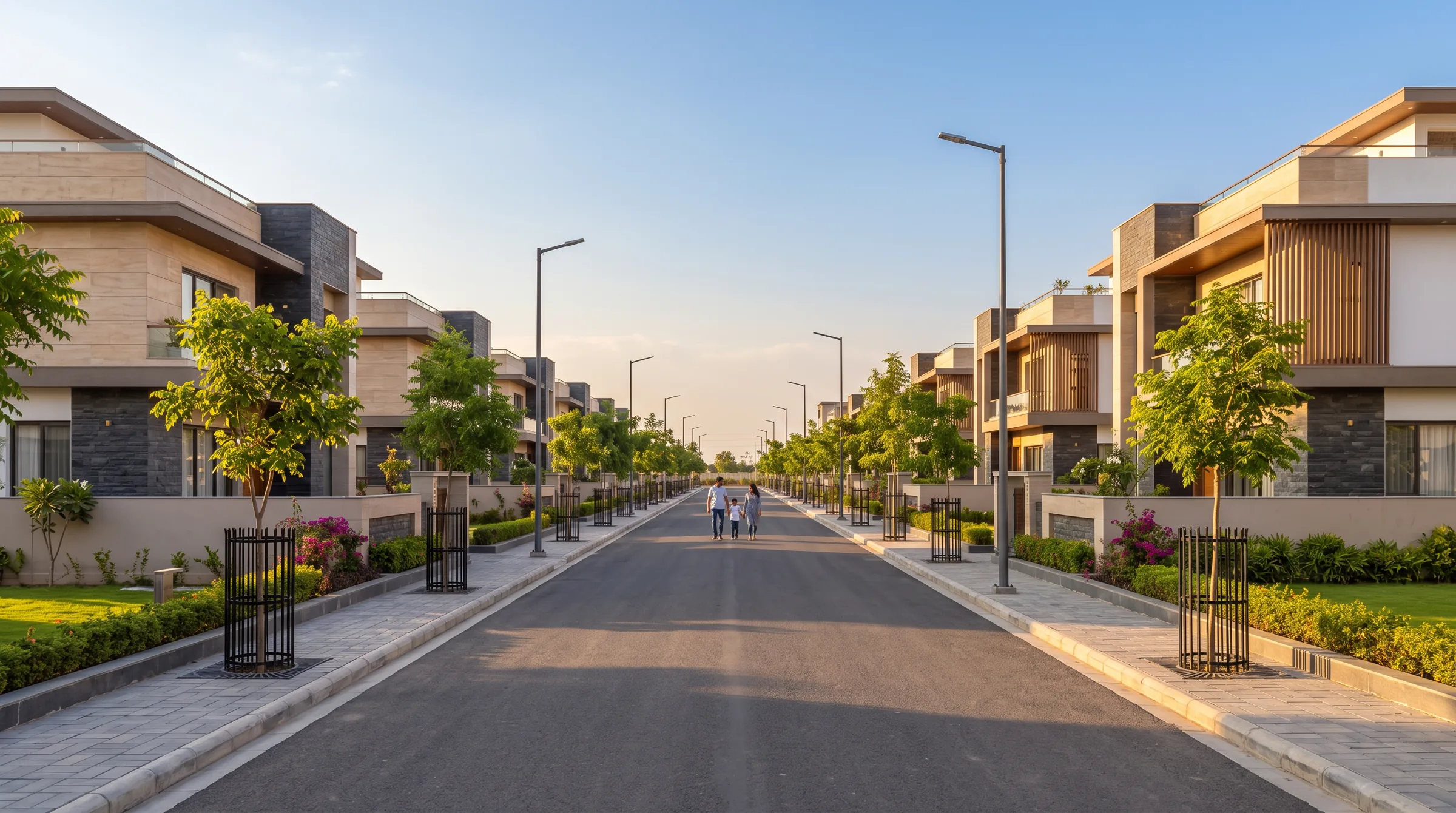
| Internal roads | At least 9 m wide | Room for two cars to pass and park |
| Open space | At least 7.5%, one pocket of 0.3 acre or more | A real park, not leftover strips |
| Shops | Up to 4% commercial area | Daily needs inside the colony |
| Community land | 10% given free to the Government | Sites for schools, health and other facilities |
| Floor area ratio | 2.0 on plots up to 150 m² | Built-up area up to twice the plot area |
| Independent floors | Registration allowed | Each floor can be registered separately |
| Parking | Stilt parking allowed | Ground floor can be open parking |
| Price | No cap | The developer sets the rate — compare price lists |
| Completion | Within 7 years (5 + 2) of the licence | A deadline you can hold the developer to |
03
How plots are released
Licence
Town & Country Planning grants the colony a DDJAY licence (5 acres or more to start, up to 15 acres in total).
HRERA registration
The project is registered with the Haryana Real Estate Regulatory Authority, and the number must appear on its advertising.
First half on sale
The developer allots up to 50% of the saleable residential plots in the first phase.
Second half after works
The remaining 50% — including 15% mortgaged as security — is released once internal development works are complete.
Completion
The project must be completed within 7 years of the licence (5 + 2).
04
Where DDJAY applies
DDJAY colonies are allowed only in the residential zones of low and medium potential towns, and only up to set shares of each residential sector. In Rohtak, the Department's licence list shows DDJAY colonies in sectors including 22D, 25D, 36 and 37; Empire Valley is in Sector 36A.
The policy has been amended since 2016. Ask the developer which notification their licence was granted under, and check the latest version on tcpharyana.gov.in.
- Sectors with DDJAY colonies (TCP list)
- 22D · 25D · 36 · 37
Source: Town & Country Planning Dept., Haryana — Rohtak DDJAY licence list
Questions people ask
Is DDJAY a government housing scheme?
It is a government policy, but the plots are developed and sold by licensed private developers, not by the government.
Who can buy a DDJAY plot?
The 2016 policy does not set income conditions for buyers, and it removed separate EWS plot categories. Check the allotment terms of the specific project.
What is the maximum DDJAY plot size?
150 square metres, about 179 square yards (gaj).
Can I build four floors on a DDJAY plot?
The 2016 policy allows a floor area ratio of 2.0 and registration of independent floors. The number of storeys depends on the current building rules — confirm before you design.
Keep reading
More for Rohtak plot buyers
Free site visit
Walk the plots before you decide.
Ask for the layout plan, availability and price list. Call or WhatsApp +91 7018 45 7018.
HRERA HRERA-PKL-ROH-804-2025 · DDJAY licence 163 of 2025